
(All respectable publications should have their holiday traditions. This evergreen post, first written in 2004, has become a 10,000 Birds staple. Merry Christmas!)
Everybody knows the Christmas carol, “The Twelve Days of Christmas.” Easily the most endless song this side of “99 Bottles of Beer,” this old chestnut has simultaneously delighted and horrified holiday celebrants for centuries. Of particular note is the song’s emphasis on avifauna. No Christmas carol features birds as prominently as this one. To the birder, this begs the question: what species of birds appear in the Twelve Days of Christmas?
The origins of this venerable whimsy are, as so many things more than a century old, shrouded in mystery. A popular bit of religious propaganda making the rounds posits that this song is a “catechism song” written to help young Catholics learn the tenets of their faith. The partridge in a pear tree is said to represent the Christ Himself, and each other gift has a numerological equivalent in Catholic doctrine. The good folk at Snopes.com refute this myth and assert the secular nature of the Twelve Days of Christmas. Still, although we know that this song is old, dating back to the 17th century or earlier, it’s true origin is unclear. Perhaps a French love ballad or maybe an English drinking song, this carol makes one thing perfectly clear: birds make festive Christmas gifts!
On the first day of Christmas my true love sent to me: A Partridge in a Pear Tree
The partridge, a member of the pheasant family, has been a traditional game bird in England for centuries. The plump, hen-like bird perched precariously in the pear tree is probably a Grey Partridge (Perdix perdix).
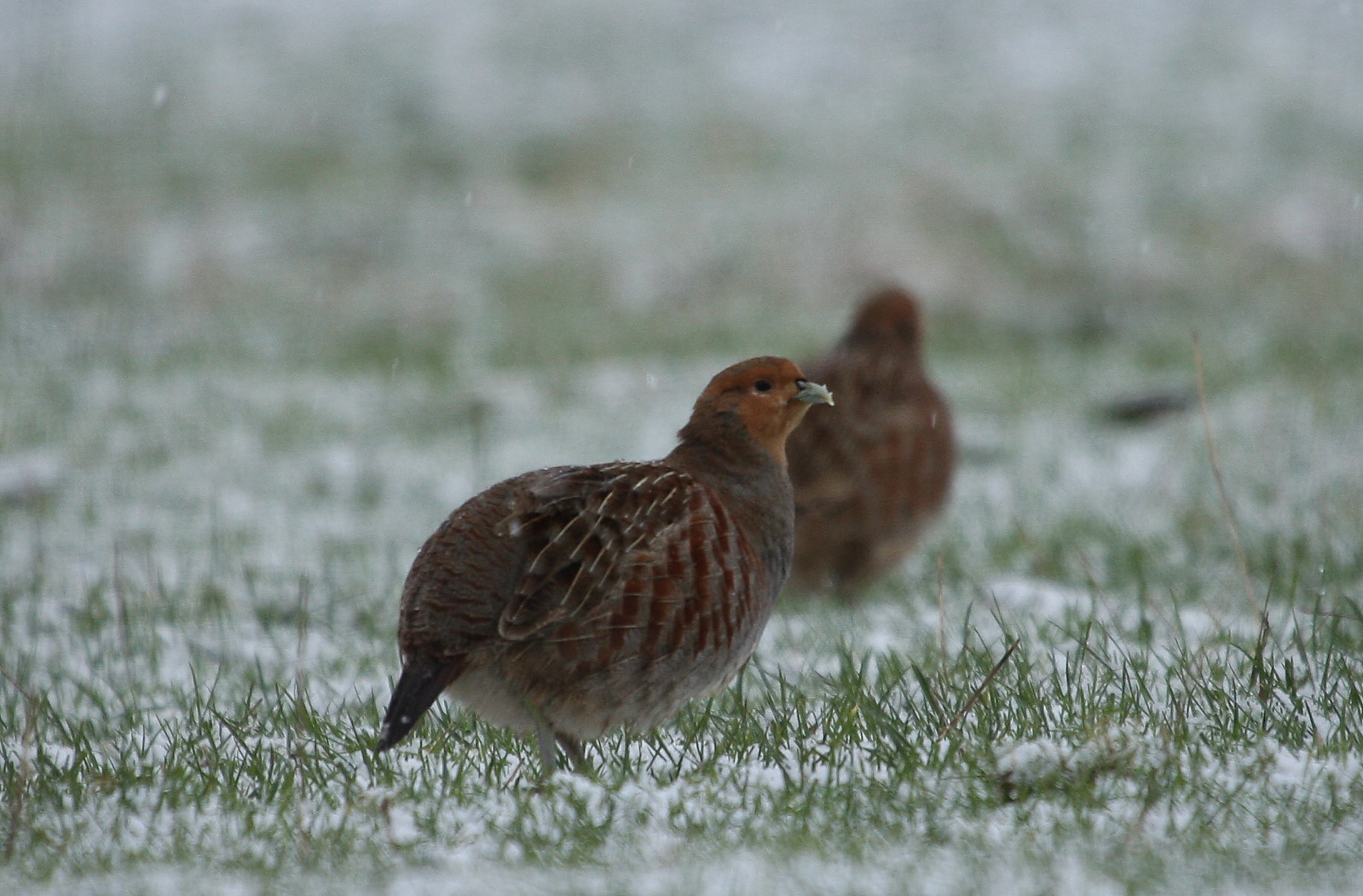
Grey Partridge by Alan Tilmouth
On the second day of Christmas my true love sent to me: Two Turtle Doves
The Turtle Dove (Streptopelia turtur) is a common summer visitor to England. It is a dainty dove, smaller and darker than most other pigeons.
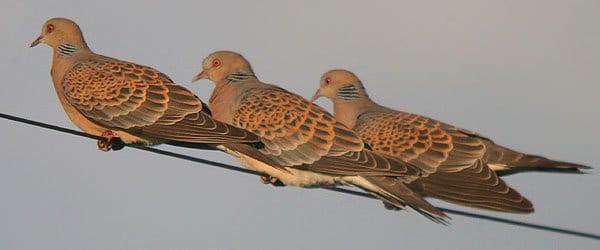
Oriental Turtle Doves by Corey Finger
On the third day of Christmas my true love sent to me: Three French Hens
Exhaustive inquiry turned up nothing about the distinctive qualities of Gallic galliforms. This gift is no doubt one of fancy domesticated chickens (Gallus gallus domesticus) from France, cooked perhaps in the Parisian style.
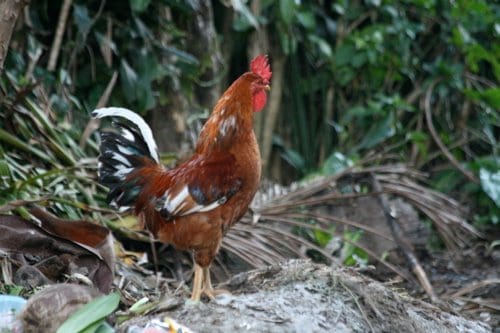 Rooster by Julie Zickefoose
On the fourth day of Christmas my true love sent to me: Four Calling Birds
One usually interprets “calling bird” to mean “song bird.” This could refer to any of the passerines, though most likely a canary or similar caged exotic. However, in this case, a bit of research paid off. It is widely accepted that the original gift was one of four “colly birds,” not four “calling birds.” The word colly means “black as coal.” Thus, the gift on the fourth day could be none other than the Common Blackbird (Turdus merula), ubiquitous in the UK. This discovery seems rather unappetizing in light of the realization that these gifts are meant to be enjoyed in a gustatory fashion. Suddenly, that bit about “four-and-twenty blackbirds baked in a pie” seems way too literal for my modern tastes.
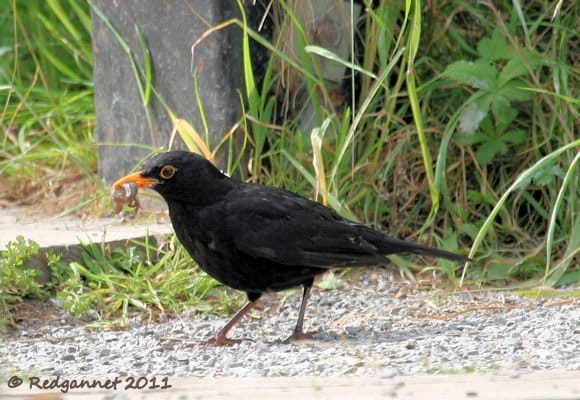 Common Blackbird chomping on a newt by Redgannet
On the fifth day of Christmas my true love sent to me: Five Golden Rings
This is another case where a literal reading of the verse obscures its true meaning. Why would the benefactor in this ballad vacillate from birds to jewelry to birds again? Another interpretation of this line introduces consistency to the offerings. The golden rings are actually ring-necked birds. Common (Ring-necked) Pheasants (Phasianus colchicus) were introduced to England from China and other parts of Asia in medieval times. Like so many of the birds of that era, pheasants were yet another source of sustenance.
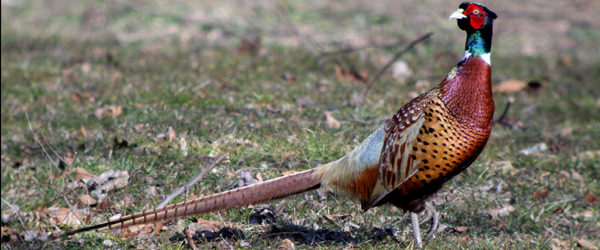
Ring-necked Pheasant by Corey Finger
On the sixth day of Christmas my true love sent to me: Six Geese-a-Laying
This line does not require inference or imagination to understand. The geese in question are probably domesticated, so we can cover our bets with the Greylag Goose (Anser anser), the ancestor of most domesticated geese. The Greylag Goose is a large, bulky native of the United Kingdom.
On the seventh day of Christmas my true love sent to me: Seven Swans-a-Swimming
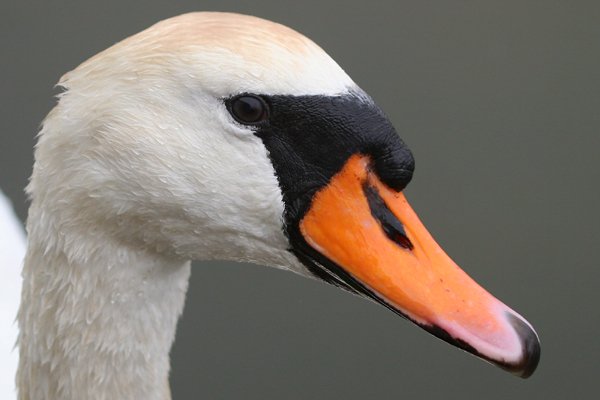
At this point, the gifts seem to turn from edible to ornamental, since I’m not sure that any generation has come up with a decent recipe for swan. The graceful, white waterbirds meant to thrill the recipient of this yule bounty is probably none other than the bane of the Chesapeake watershed, the Mute Swan (Cygnus olor). This super-competitor, the bird that launched the Migratory Bird Treaty Reform Act of 2004, is a Eurasian endemic and as lovely a swimmer as one is likely to find.
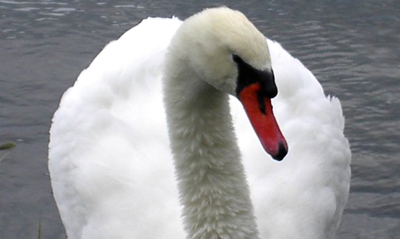
One Swan-A-Swimming
The rest of the song, with its lords-a-leaping and maids-a-milking, is inconsequential from an ornithological perspective and irritating from an aesthetic one. Those first seven verses, on the other hand, offer an astonishing insight into the extravagant gifting conventions and ravenous appetite for bird flesh in England during the Baroque era.
In the interest of completeness, we would be remiss if we didn’t point out that The Twelve Days Of Christmas hardly represent the full sum of birds connected to this cherished holiday. In addition to the birds turned up during traditional Christmas Bird Counts, a number of species from two different Christmas Islands have been gifted with improbably festive names…
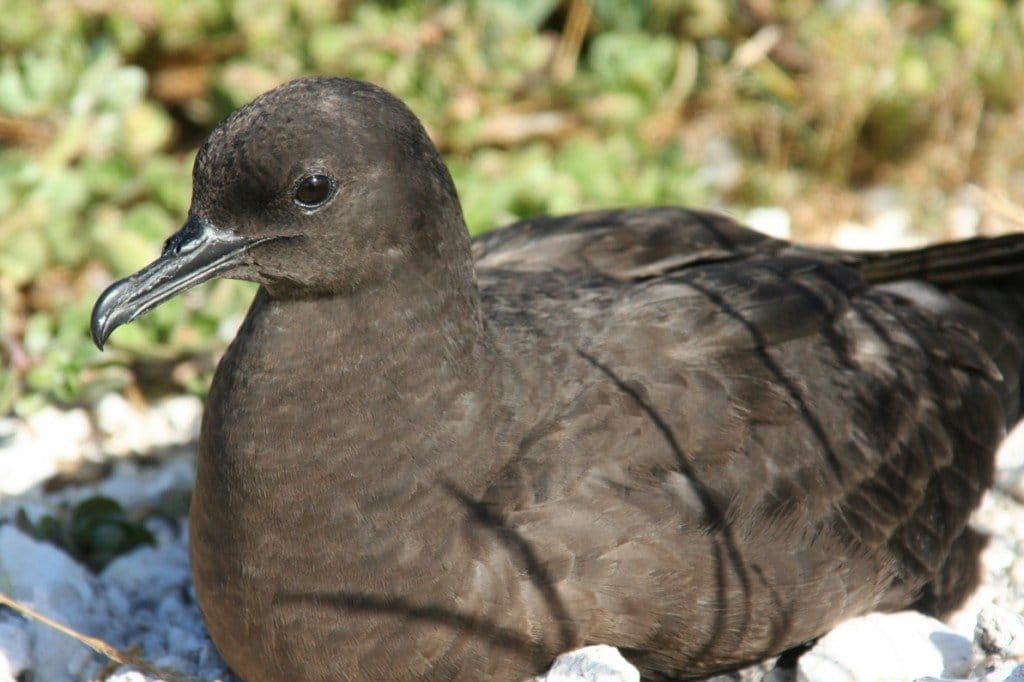
Ho ho ho, Merry Christmas Shearwater by Duncan Wright
Happy Holidays from all of us!!




So, if my maths is correct (and it almost certainly isn’t), by the twelfth day, the table would be creaking under the cumulative weight of:
12 partridges
22 doves
30 hens
36 blackbirds
40 pheasants
42 geese
42 swans
I’m surprised any lords would be leaping after that. More likely lolling at the table refusing any more ‘wafer-thin mints’ …
(Dang! I wish I’d thought of this post first!)
I love that wafer-thin mint reference, Snail.
Laugh. A wafer-thin mint reference is always a good one!
I have one partridge in a pear tree ornament on my tree. And, I agree, that song has always seemed interminable to me!
At least the load could be condensed a bit by baking two dozen of those blackbirds in a pie.
Great article.
Do 5 California quail in a backyard count?Â
I think that you should know that in the spirit of Christmas an’ all, I’ve shamelessly nicked your idea and given it an Antipodean twist …
‘Tis the season of giving, Snail. I love your idea! Your true love better like quail, though…
Merry Christmas and good birding to you all!
I’m not sure that any generation has come up with a decent recipe for swan.
I can say from experience that they are able to be made into perfectly edible sausages, albeit with a somewhat earthy taste.
Merry Christmas, Mike–and to Corey and Charlie, too!
Thank you for all the help and inspiration you are to those of us in the NBN and all who may visit here.
Many wishes for your continued successes in the new year.
And many more birds!
LOL, great post!
¡¡¡FELIZ NAVIDAD!!!
Merry Christmas!!
Hugs from Peru,
Mel
Timely–my daughters & I were singing The Twelve Days of Christmas this evening. The laying geese probably weren’t cooked, since they were laying. Maybe the eggs were served with the swan. I don’t know much about swan cooking, but one was featured in the last episode of The Tudors this season, the one with the demise of Ann while Henry was eating said swan. However, we are all vegetarians in this house and so only faux-fowl are eaten here.
Wonderful post, Mike! So good, in fact, that I had to link to it myself so hopefully a few more will enjoy it as I did. Thanks!
That partridge looks a lot like a chukar to me! After reading all of this, I’m tempted to think this was a hunting song! By the time you get to the end with the maids a-milking and the Lords a-leaping I think the holiday festivities are in full swing! A very interesting read!
Just a thought about the swans-a-swimming. Swans in England have been the considered the property of the Crown for hundreds of years. The annual event known as Swan Upping was/is the official counting of the royal birds. This event is held when the cygnets are very small and the adult birds are reluctant,or unable due to molting,to fly.
Perhaps the gift of seven swans implied a royal dispensation or the that the giver had connections?
Sylvia, that is a very interesting idea. I’ve never heard this connection made before but I like it.
This article states “The rest of the song, with its lords-a-leaping and maids-a-milking, is inconsequential from an ornithological perspective and irritating from an aesthetic one.” This is not the case. As a child I was told that all the items mentioned are birds with colloquial names. Gold rings are plovers; Lords a leaping are cock pheasants, Drummers drumming are grouse, but I have forgotten the birds refered to as Pipers, Ladies dancing, and Maids a milking. Can anyone help me here?
that really kool in i want a bird lik dat it is so kool nd i lik the blue bird alot
John,
I’ve also heard that all the items given in the song were birds, but I can’t find anything to support that on the web but your post (at least I’m not crazy).
I’m not a birder, but I seem to remember a bird with a long thin bill was the piper (called such because it’s noisy). The Maids a milking is a bird that stays close to cows.
This thread made me smile, so I couldn’t help but add to it, even though it is several years old.
I, too, was told that this song is a Medieval riddle song and that all the gifts named therein were birds.
Gold rings are pheasants; Lords a leaping are herons(which take flight by leaping into the air), Drummers drumming are grouse (which make a drumming sound on their lek (breeding grounds), Pipers are plovers (also called piping plovers), Ladies dancing are cormorants (which have a distinct bobbing stance), and Maids a milking are white egrets (sometimes called cattle egrets).
I can’t confirm the ornithological accuracy of this list but I offer it for your amusement.
I’m so glad I found this site! I think all the gifts refer to birds also, although I have no solid evidence. I really like WhiteCedar’s explanation. Seems logical to me. Why would the first seven gifts be birds and then suddenly jump to other random items? And the names of the last five gifts suggest birds to my mind. I was thinking of sand pipers and woodpeckers, but then, I’m not a huge bird person or an historian…. So interesting! Thanks all, for posting!
your research is awesome and is very close to what I discovered. I researched this earlier this year and was just brushing up on my blog making sure I had everything I needed for my family christmas program. you stopped at day 7 but I found out that it is ALL birds. or certainly could be. 10 Lord’s a leaping… there is a Lord God Bird, a woodpecker and it leaps. In fact many birds leap. 8 maids a milking. the cuckoo bird is called a maid and they milk their young. 9 ladies dancing… There is a Lady roco bird… and it could just be referring to female birds dancing. birds dance and leap. 11 pipers… there are sand pipers. 12 drummers drumming… many birds drum… in fact the ruffled grouse (PA) is called a partridge or drummer. thought you might like to know. no proof of if that is what the author of the song intended but hey, it works.
Love this post! Merry Christmas and happy holidays to avian watching enthusiasts the world over. It is all too easy to overindulge during the holidays so go birding instead of eating that extra mint even if it does happen to be thinner than a wafer. If not, you might need to go birding with a bucket…
Merry Christmas and Happy Holidays, 10,000 Birds! I love this post. I knew a little bit of the song’s history, but this post — and the ensuing commentary — educated me beyond my rudimentary understanding. Thanks for all you do, and for your consistently fantastic writings, images and subject choices. Wishing you all a beautiful start to 2012!
YEAH! Thanks for colly and gold ring clarification! Looking forward to massacring poem (not birds) at reading. Sure they ate swans – back in Tudor times I seem to remember they’d haul them onto the table in virtual reality, with skin/head/feathers intact and food enclosed which I’d assume would be minced swan. Obviously only eaten (or served like this)by those with lashings of loot – namely kings. Think of swams protected on Thames….
This morning a former gardener for the Queen was on the radio and he was talking about this. He said the “five gold rings” are Chinese Golden Pheasants.
Can anyone tell me a carol similar to the 12 days of Christmas, sung on 12th Night – counts down from 12 to 1, and has a “happy aged bird” in the title – but it is not a partridge? (this is just a quiz clue I cannot get teh answer for!)
Both swans & peacocks were eaten during the middle ages
The Five Gold Rings was orginally ‘Five Gold Spinks’, the old name for the (european) Goldfinch