

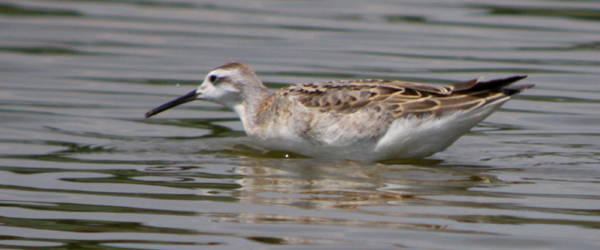
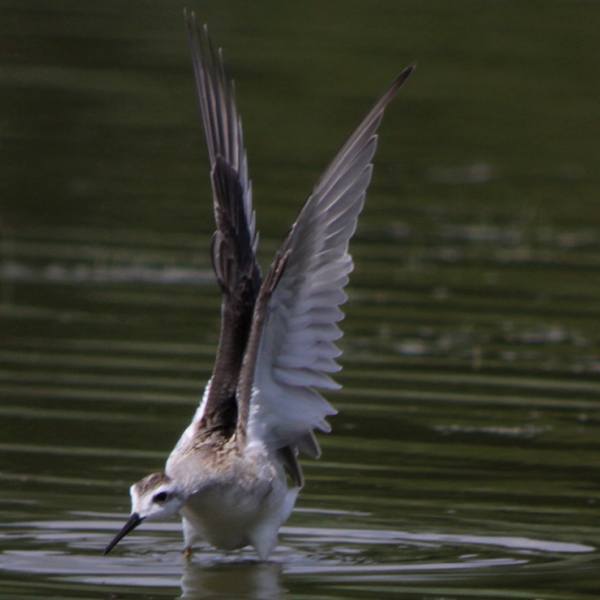
This year has been a good year to see Wilson’s Phalaropes at Jamaica Bay. There were several that stopped by this spring on their way north, including the pair that spent several days on the East Pond’s algae mats, and at least two have been present on the East Pond this summer, fattening up before continuing their journey south. Of the three phalarope species Phalaropus tricolor is easily the most likely to be spotted on land in the east, but any time one spots a phalarope is a good day.
This particular bird is identifiable as a juvenile because The Shorebird Guide tells me so. To be more specific it tells me that juvenile Wilson’s Phalaropes are
aged by dark upperparts with crisp pale fringes; note numerous pale gray nonbreeding scapulars; molts out of juvenal plumage early, so most migrants show variable gray upperparts but retain juvenal tertials and wing coverts
To put it into non-birder jargon, there are feathers on the bird’s back that are dark with pale edges; were this bird a fully adult bird those feathers would not look like that. The feathers on the bird’s back that are uniformly gray are feathers that have already been molted and replaced with adult basic (non-breeding) plumage feathers. Neat, right?
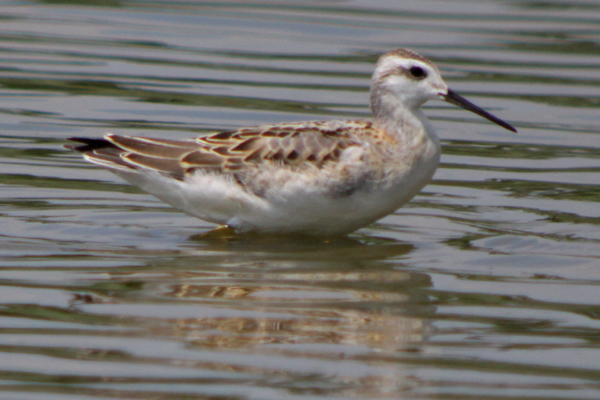
Anyway, I hope you enjoy these images. I know I liked taking them and am glad that I was birding with Doug Gochfeld, who called the bird a juvenile and, by doing so, piqued my curiosity and made me learn the field mark that allowed him to call the bird a juvenile. It is always good to bird with birders better at birding than you…
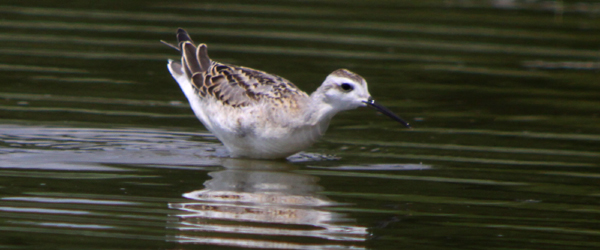
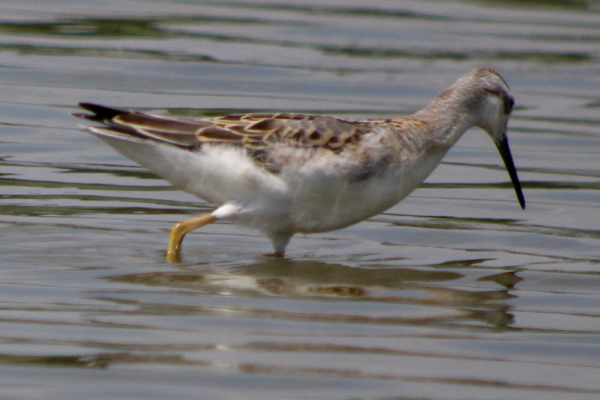
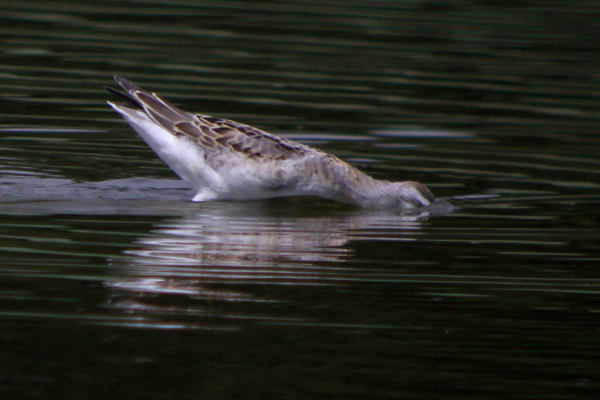
…







Having the Jamaica Bay mud in mind, you sure it was molting and not molding?
Just stay for 2 more days, please, please!
I hear that Will. I’ll be flying into JFK on Friday and hoping to come back early Saturday morning birding before my wife monopolizes all my time. Any of the intrepid 10000 birds birders planning on being at Jamaica Bay on Saturday morning to show an out of towner around?
@Jochen: ha!
@Will: We can hope…
@John Marvin: I won’t be around but I am sure there will be quite a few birders out and about…