

I’ve mentioned before that New Zealand is a great place for enjoying petrels. In particular the South Island destination of Kaikoura is world-renowned for the flocks of albatrosses and giant petrels floating right off the pelagic boat, and the ease of the trip makes it a must-visit for any visiting birder. Kaikoura isn’t, however, the only pelagic birdwatching destination in New Zealand, and a few days before Christmas last year I was able to go out on a trip in and around North Island’s Hauraki Gulf. The trips are run by the good people at Pterodroma Pelagics, and are full day affairs that cover a lot of ground. I’ve briefly alluded to my trip before in my post on White-faced Storm-petrels, in case you’ve forgotten what they look like, here’s a reminder.
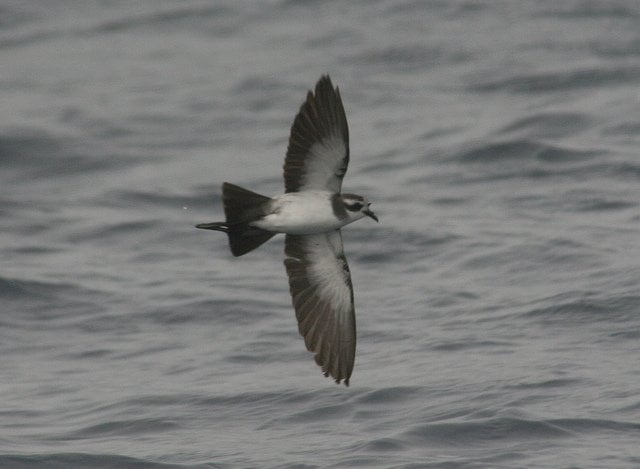 White-faced Storm-petrel (Pelagodroma marina)
The trip set out from the Northland town of Warkworth (around an hour north of Auckland) bright and early at 8. As we left the long harbour there were plenty of inshore seabirds such as gannets, shags, gulls and terns. Soon we were out of the protected harbour and into choppier waters, and here I have to say I suffered for about two hours from the dreaded affliction known as sea-sickness. This didn’t stop me from birding entirely, but I had to periodically lie down until it passed. Almost as soon as we were clear of the shore we encountered a pod of Short-nosed Common Dolphins and large flocks of Fluttering Shearwaters, Flesh-footed Shearwaters and Buller’s Shearwaters. Birders who have been to California might be familiar with the latter two, indeed we would be close to the Poor Knights Islands later in the day, the site of the only breeding colony of Buller’s Shearwaters in the whole world.
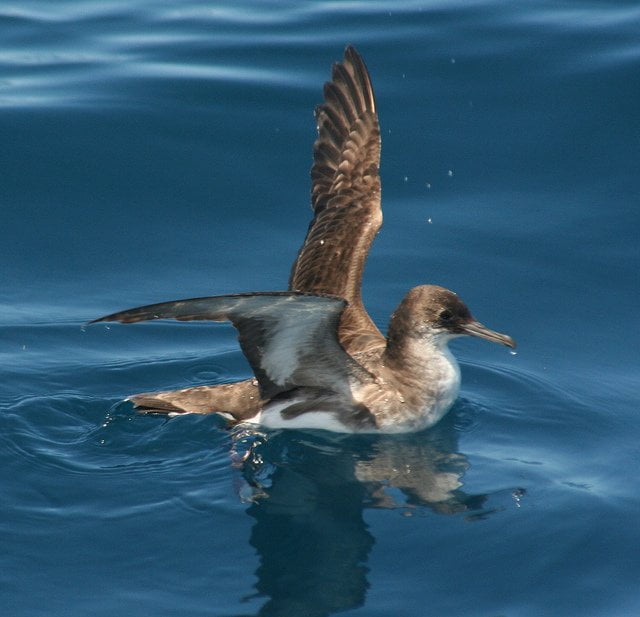
Fluttering Shearwater (Puffinus gavia)
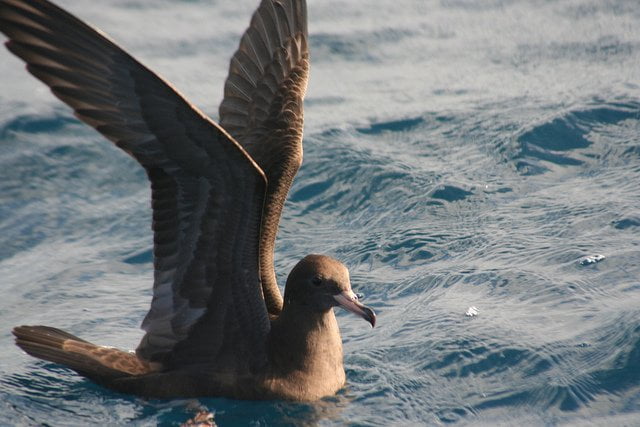 Flesh-footed Shearwater (Puffinus carneipes)
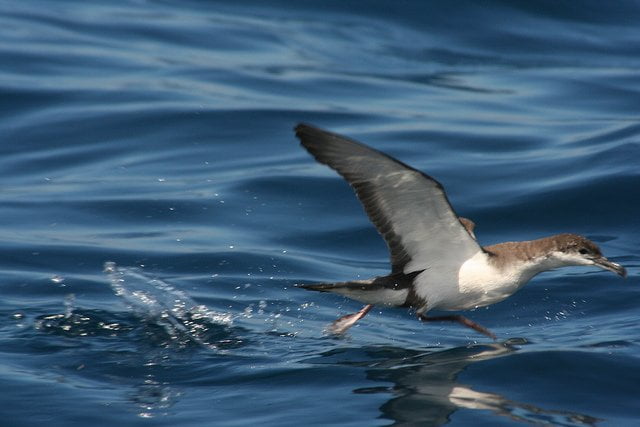 Buller’s Shearwater (Puffinus bulleri)
Along with these three were Two further species, also both familiar to North American birders, Sooty Shearwaters and Short-tailed Shearwaters. The Fluttering Shearwaters were the most common species closer inshore, as we got further out the most common species (in fact the most commonly seen species of the trip, was the Fairy Prion. In spite of its ubiquitousness these little petrels are a delight, swooping and pattering across the surface as if they were storm-petrels (of which there were plenty as well). Prions are an interesting little group of procellariid, distinct from the gadfly petrels, shearwaters and fulmarine petrels, and I’ll dedicate a post to the group at some point in the future.
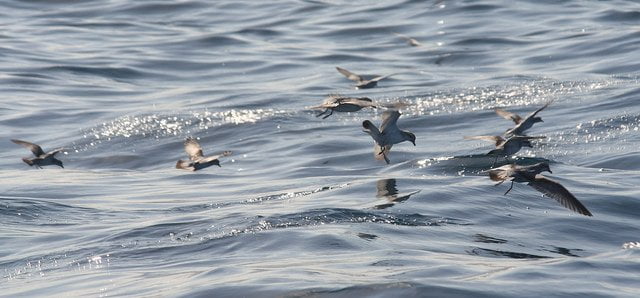

Fairy Prions (Pachyptila turtur)
And then there were the “true petrels”, insofar as that group has any taxonomic meaning anymore. The first to cruise past in a hurry were the stunning Cook’s Petrels. They never seemed to land (and certainly never close to the boat), instead zipping by like streamlined yachts coming to watch the rowdy crowds assembled around the boat. In contrast the large Black Petrels (also known as Parkinson’s Petrels outside of New Zealand) are ornery birds that demand attention as they float about the boat. In spite of their large size they are actually the smallest of New Zealand’s Procellaria petrels. It is also restricted as a breeder to the north of North Island. The final large petrel species is another gadfly petrel, albeit a much larger one than the Cook’s Petrel. The Grey-faced Petrel has all dark plumage with a lighter area around the face. It is also known as the Great-winged Petrel outside of new Zealand, a name that also suits the species. It is known by the Maori as the Oi, and like the Sooty Shearwater is an important muttonbird.
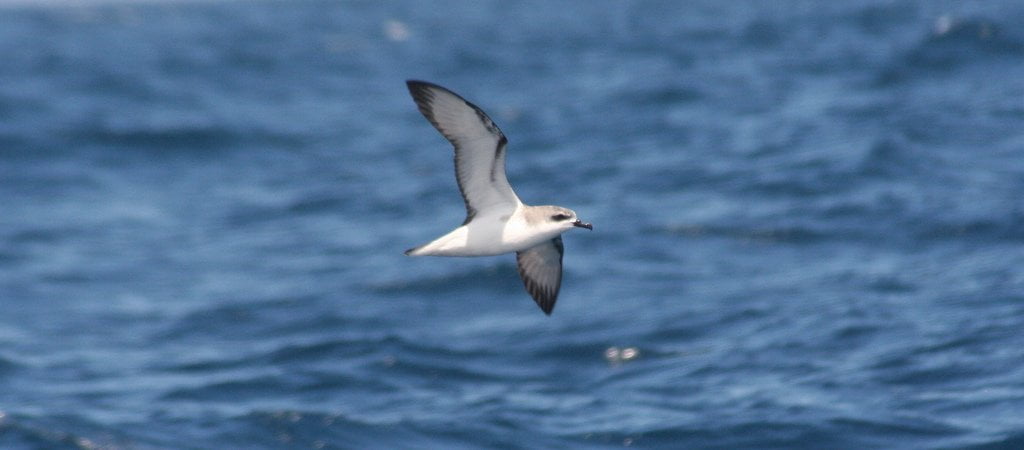 Cook’s Petrel (Pterodroma cooki)
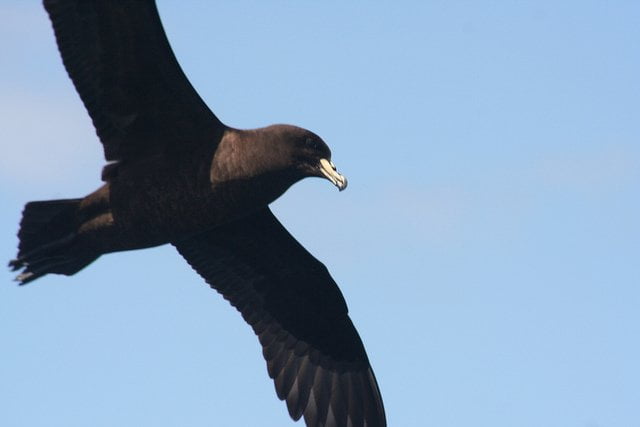 Black Petrel (Procellaria parkinsoni)
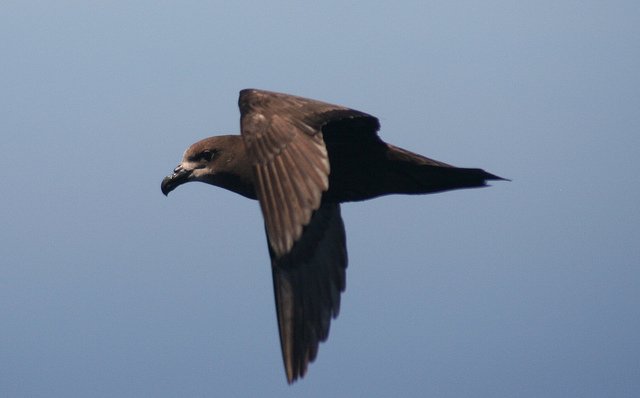
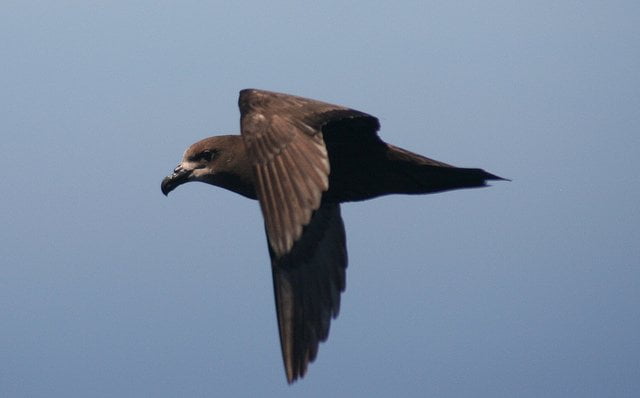 Grey-faced Petrel (Pterodroma macroptera)
The Grey-faced Petrels and Black Petrels became more common the further out we got. We soon were close to the Mokohinau Islands, one of the many islands in the area that serve as wildlife refuges. It was into a bay in one of these islands that we pulled into briefly to have lunch. By now the sun was shinning and my seasickness had mercifully gone. The islands had a number of birds themselves, not as many as the larger or closer islands like Little Barrier Island, but we were able to see Kereru/New Zealand Pigeon, Tui, and New Zealand Fantails. One birder from Australia even got his lifer Red-crowned Parakeet! After lunch a small group of rocks in the northern end of the group held an additional treat, a group of non-breeding Grey Noddies (known here as Grey Ternlets, but I prefer the name noddy). These terns are generally subtropical birds of the Pacific (I’ve seen them before in Tonga) and reach the extreme south of their range in northern New Zealand.
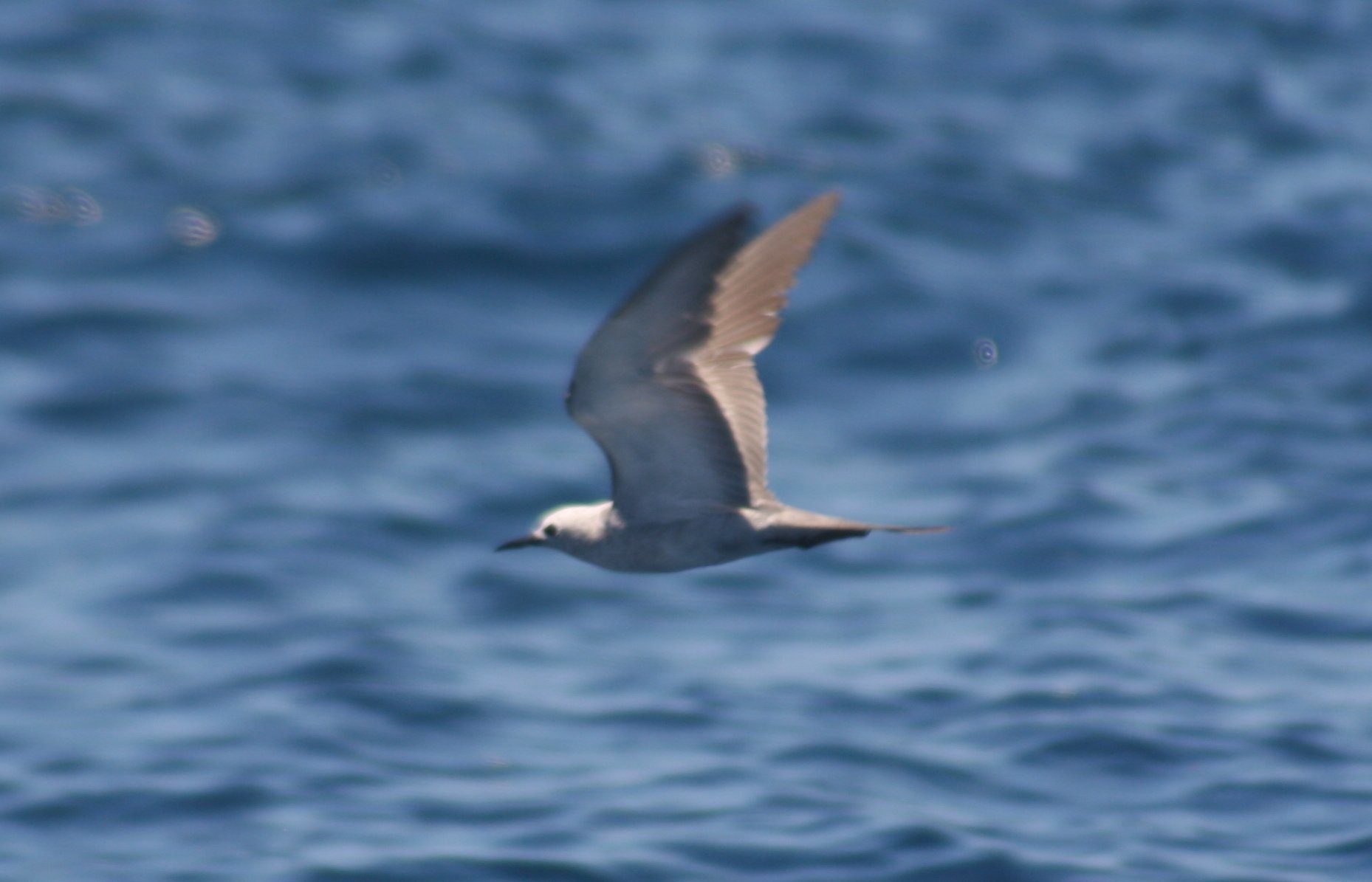
Grey Noddy (Procelsterna albivitta)
The remaining time on the trip mostly produced more of the same (not to imply that was a bad thing). We ended up staying out a long time, because there was one conspicuous no-show, the New Zealand Storm-petrel. This critically endangered species was presumed extinct for over 100 years, and was not discovered again until pelagic trips (run by the same people as mine) began chumming to attract other seabirds. As I’ve mentioned before its breeding grounds are still unknown, and the species is not common, but it is usually seen on trips, and the boat captain was reluctant to leave until we had seen one. Perseverance paid off, as late in the afternoon the call went out (spotted, I should point out, by yours trully) and a little black and white storm-petrel sailed through the throngs of Fairy Prions and White-faced Storm-petrels.
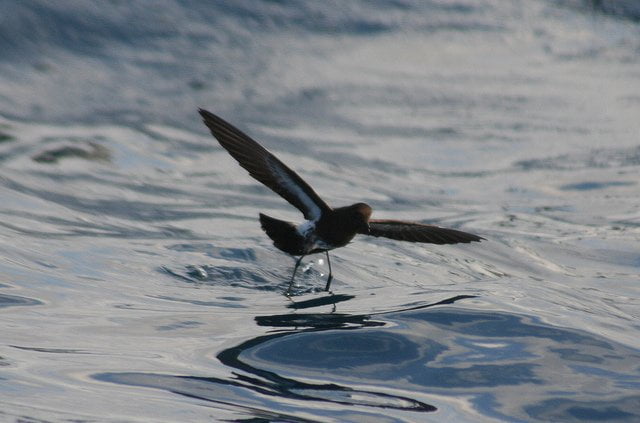 New Zealand Storm-petrel (Oceanites maroianus)
On the trip back we even managed to get distant looks at one final petrel, the Common Diving-petrel. As with the Fairy Prion, the northerly location meant this was the only species in its group it could have been, a blessing as species within these two groups are notoriously hard to tell apart in the wild.
The Hauraki Gulf trip deserves to be on the itinerary of any birder visiting New Zealand. The trip is very different to my trip out of Kaikoura, which was very albatross-dominated (albatrosses do occur at Hauraki but are seasonal and rarer), although the exact composition of what you see at both varies greatly by season. I personally had a great if exhausting day. If you are interested, I have more photos of the day here.





Wow!
That is all.
Double wow! I want to see prions someday.
Just amazing.