

Though Queens, especially Jamaica Bay, is known for the fabulous numbers and variety of shorebirds that come through in fall migration there are often quite a few shorebirds to be seen in the spring as well. Sure, Siberian vagrants are pretty unlikely in spring but the lack of rarity is made up for by the common birds being in breeding plumage. Because my year list had been seriously lacking in shorebirds I decided to try to remedy that this past Sunday with visits to Big Egg Marsh and Jamaica Bay both. My goals were to see Semipalmated and Black-bellied Plover, Red Knot, and Short-billed Dowitcher, and to see if I could manage to distinguish a White-rumped Sandpiper from all the Semipalmated Sandpipers.
My first stop was Big Egg Marsh and as soon as I got off the bus I had a feeling that the birds were going to be good. Once I took a minute to get my scope’s tripod extended, my binoculars out of my backpack and around my neck, and my camera on my shoulder I was ready to go. And, walking across the athletic fields to get to the bayshore to look for shorebirds feeding on Horseshoe Crab eggs I was greeted by a Willet on a backstop!
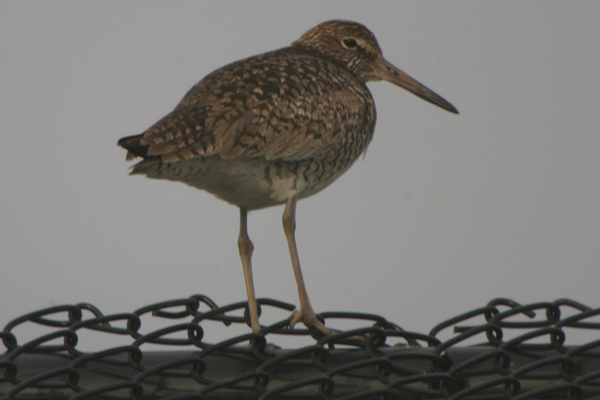
Now Willets are a common breeding shorebird in the marshes of Queens but I had never seen one take an interest in baseball before and I figured having a bird like that in such an auspicious location could only be a good omen for the rest of the day, and, when I spotted a Greater Yellowlegs in the little tidal creek next to the baseball fields I was even more sure.
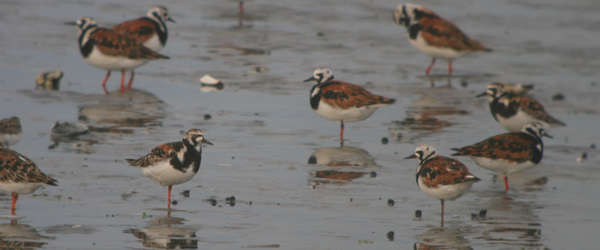
Of course, the sheer volume of birds to be seen once I actually reached the shore was an even better sign of a good day’s shorebirding. As I walked up a Killdeer took off with its “kill-dee kill-dee” cry. Ruddy Turnstones in plumage that made it pretty evident why they used to be referred to as “calico birds” were out in numbers and hordes of Semipalmated Sandpipers were feeding like mad above the high tide line. I picked out three Semipalmated Plovers to add to my year list but they weren’t as nice to look at as several breeding-plumaged Dunlin were.
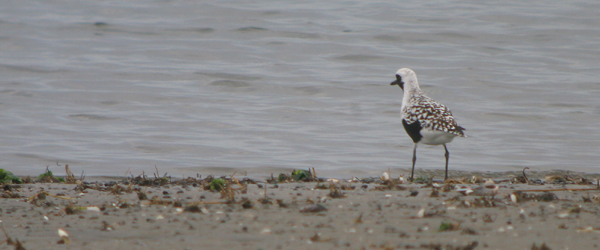
While seven species of shorebirds are always nice to see the fact that it was low tide led me to believe that a later visit to Big Egg Marsh would be more productive (shorebirds tend to gather there at high tide when mud flats that are exposed at low tide are inundated) so I headed off to Jamaica Bay to see what I could find. Sure enough, when I walked out to the end of the Terrapin Trail their were lots of shorebirds visible out in exposed mud and marshy places that I could only identify because I had a scope. I quickly added some long-range Black-bellied Plover and Red Knot to my year list. The Red Knot were especially pleasing because I counted forty-five of them! Other birders were out on the trail looking at the shorebirds as well which is always an enjoyable situation because no one manages to see everything but when everyone is sharing what they see the day list grows and grows, which is how I managed to add three Short-billed Dowitcher to both my day and year lists.
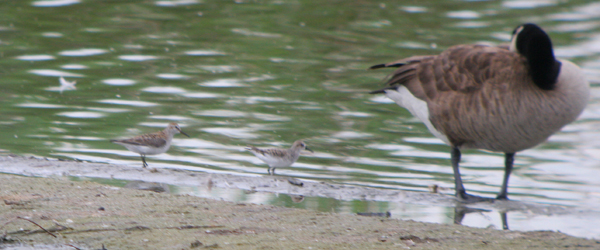
And, of course, there were still tons of Semipalmated Sandpipers around and the usual American Oystercatchers were present as well. But I wanted to find a White-rumped Sandpiper and I tried and tried and tried but I just suck at shorebirds so I gave up until I ran into Seth (the birder who found and identified the Philadelphia Vireo) and he showed me some shorebirds that he said were White-rumped Sandpipers that I would have passed by as Semipalmated Sandpipers. White-rumped Sandpipers are far too boring a bird to be considered a species and if they were magically removed from every field guide I don’t think anyone would miss them (I know, I can’t believe that I just typed that either). Seriously though, if one does not see them in flight one does not see their white rump (which is actually not that noticeable) and without that what is the field mark you use? That they are a bit sleeker and longer than a Semipalmated Sandpiper? Even The Shorebird Guide (which I love) is reduced to subjective descriptions like “‘athletic’ look with bulky chest”. What the hell does that even mean? So, anyway, they are on my year list (thanks, Seth) and I can safely ignore them again until next year.
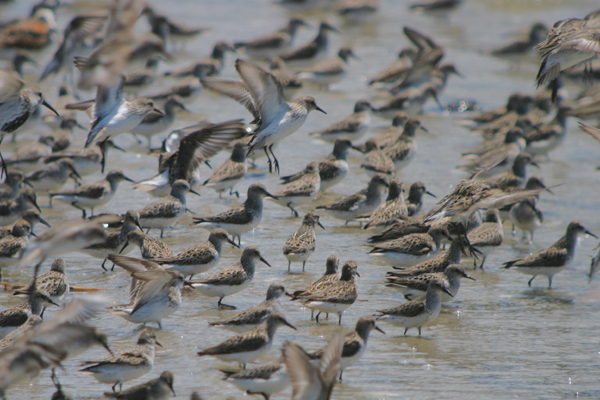
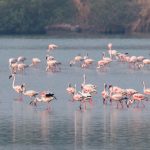
After being schooled on the obscure shorebird I ran into a fellow birder named Jared who had never seen a White-rumped Sandpiper so I attempted to show him one and couldn’t find one. It figures. Instead of continuing our exercise in futility I convinced Jared that what we should do is go to Big Egg Marsh because the tide was coming in and the shorebirds would be flying in to feed a bit more and to roost. A short bus ride later and we were staring at this:
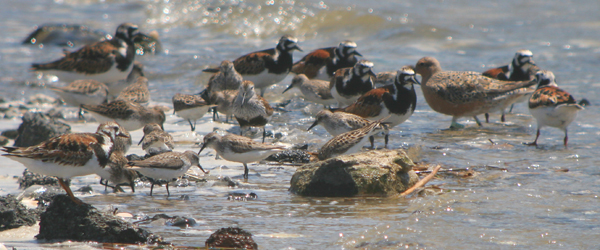
As we picked through the flocks of birds more kept arriving and we were finally rewarded with a relatively close look at a Red Knot. It is below, on the right with a bunch of other shorebirds.
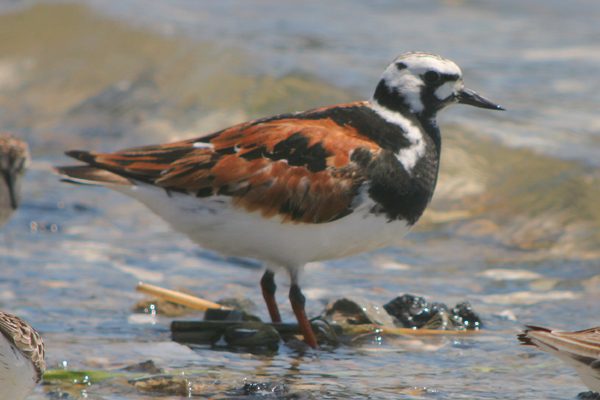
After awhile of watching the shorebirds come and go Jared and I were convinced that we had picked through all of them and that there was nothing else to see so we decided to try and find Ammodramus sparrows in the marsh. We failed. Nothing was there, no Seaside Sparrows, no Nelson’s Sparrows, and no Sharp-tailed Sparrows. Bummer. But when we started to walk back to the shorebird spot I spotted movement in the marsh grass. Clapper Rail! I could share a horrendous picture of it but, really, it is way too bad. Instead, I’ll share this Ruddy Turnstone that landed in front of us and call it a day.
My half-day’s birding led to twelve shorebird species a new rail for the year, and a new tern for the year (Least Tern, which I forgot to mention earlier). Not bad for the very end of May!



White-rumped Sandpipers are one of the few peeps whose wings project past the end of their tail, so you still have a chance on a standing bird.
Corey,
Thanks for sharing. You have much more success
at Jamaica Bay than I ever have. I so enjoy your
writing style. I almost feel like I was there (but
I never see as much when I go!).
Liz
@John: Exactly…but at very long range that gets tough.
@Liz: Thanks! And if it makes you feel any better the post covers over six hours of birding Jamaica Bay and Big Egg Marsh!