

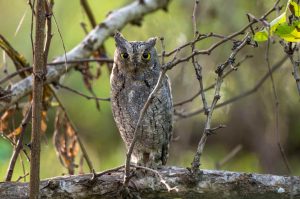
Descriptions of birds having cryptic coloration can seem confusing or even macabre to those who only know the word “crypt” as a synonym for sepulcher. The word “cryptic,” descended from the Greek kruptikos, means concealed, hidden, secret, or occult. While the funeral industry may concern itself more with the latter definitions, zoology focuses on the first two. So what exactly does cryptic mean, in the birding sense of the word? In a nutshell, it means “serving to conceal or camouflage.”
Cryptic plumage, usually subtle patterns of soft browns or grays, is a defensive adaptation; artfully-arranged stripes, spots, or shading serves to break up the structural lines of an animal, rendering it visually indistinct. The theory that you can’t eat what you can’t see seems to work fairly well in practice as there is no shortage of birds with cryptic coloration, particularly various sparrows, wrens, sandpipers, snipes, woodcock, and owls, as well as nighthawks, poorwills, and goatsuckers of every stripe.
Do not confuse the study of cryptic birds, which still falls squarely under the auspices of ornithology, with cryptozoology, the study of animals that are presumed to exist, but for which conclusive evidence is missing. The fantastical, legendary, or long-lost creatures studied in this field are called cryptids, examples of which include the Loch Ness Monster, Sasquatch, and the Compassionate Conservative.
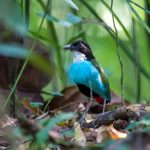
To further confuse the issue, I’ll point out that not all cryptids are cryptic. The Ivory-billed Woodpecker, which teeters on the brink of verifiable existence, is adorned in high contrast black and white, with the male sporting a scarlet crest that practically screams its presence. Bigfoot, on the other hand, is reputed to be more appropriately dressed for surreptitious success in sober earth tones.








Leave a Comment