

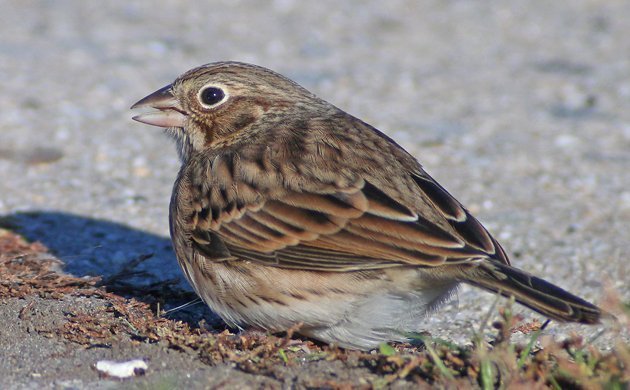
Every autumn I spend an inordinate amount of time examining the edges of fields, scrubby stands of brush, and everywhere else that little brown jobs, otherwise known as sparrows, might appear. Song Sparrows, White-throated Sparrows, Swamp Sparrows, Dark-eyed Juncos, Savannah Sparrows, and Chipping Sparrows are the most frequent birds to cross my field of view but White-crowned Sparrows, Field Sparrows, Lincoln’s Sparrows, and Fox Sparrows aren’t uncommon. Of course, I’m always hoping to find Lark Sparrows, Grasshopper Sparrows, Clay-colored Sparrows and other about annual rarities. But this post is about Vesper Sparrows, which are somewhere between the “not uncommon” and annual rarities. This year I had little luck coming across a Vesper Sparrow. Well, I had little luck until this past weekend when three of them showed themselves to me at three different parks. Two of the birds were far more cooperative than I would normally expect from this usually flighty species. (Though I have had good luck in the past.)
My first Vesper Sparrow of the weekend popped up out of the community garden at Fort Tilden and flew to a fenced in area by some houses. I saw exactly where it landed but the tall grass there kept me from actually seeing it again for several minutes. How ridiculous was trying to see it? Check for yourself!
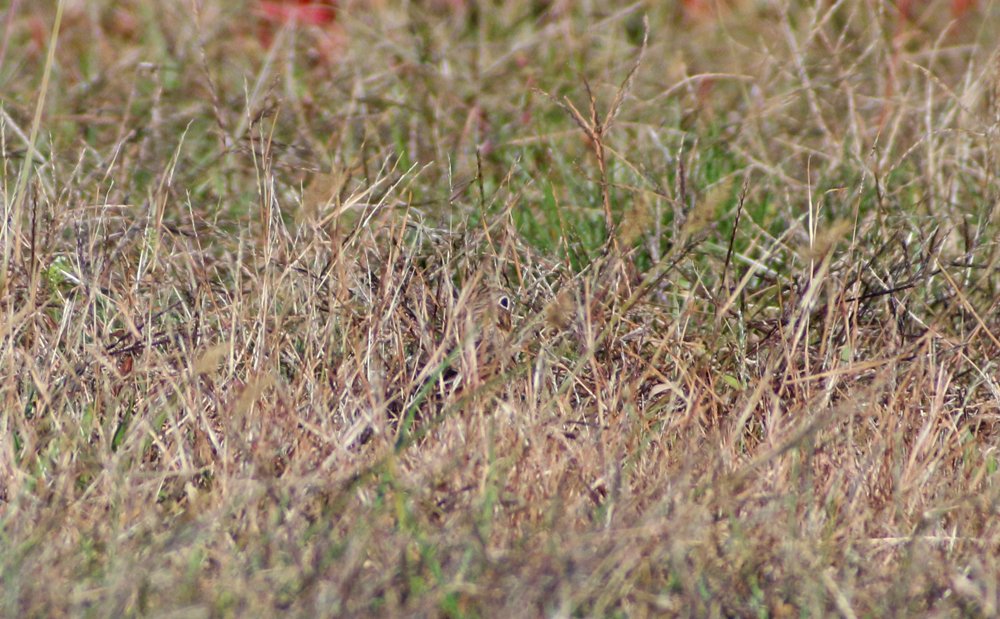
This is the best shot I got while it was in the grass. Was I glad for that target of a white eye ring!
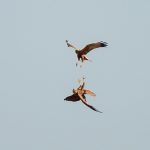
Happily, a Merlin soon strafed the area and though it paid no attention to the sparrow, which I imagine it never even noticed, the sparrow noticed the falcon and flushed. Birds make no sense sometimes, especially when they leave great cover to hide on a windowsill.
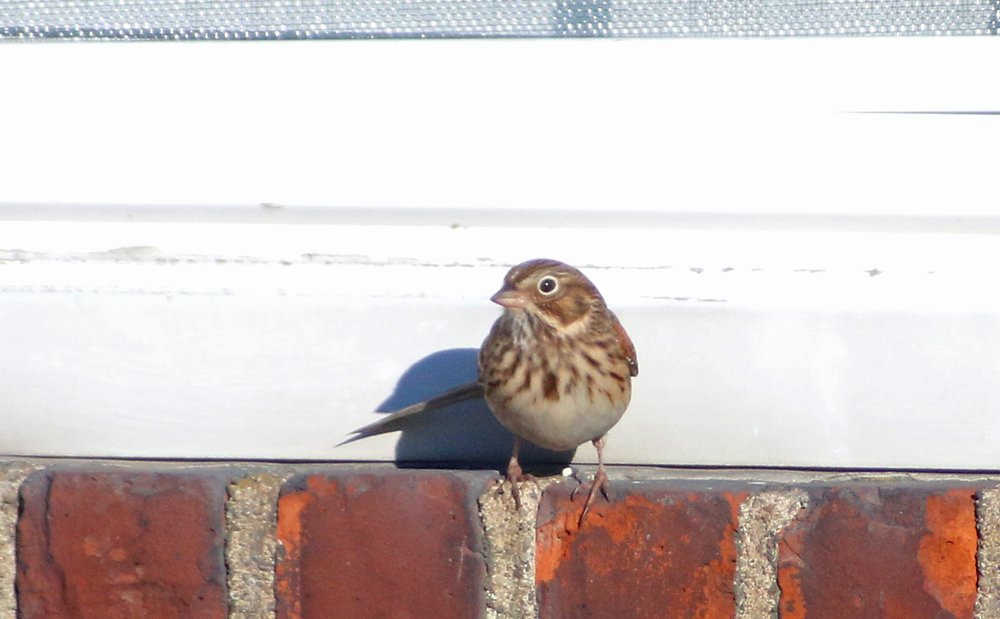
Um, Vesper Sparrow, you’re not fooling anyone. We can all see you. Get back into cover before another falcon comes through!
Fortuitously for the sparrow it soon plopped back down into the grass and I moved on, tired of waiting for it to come out into the open somewhere a bit more natural than a brick building.
My next stop Saturday morning was at Jacob Riis Park. And the first bird I laid eyes on was a second Vesper Sparrow! It was feeding along the edge of a paved walkway which left it wonderfully exposed to my binoculars and digscoping rig. Interestingly, this bird didn’t flush from its exposed location even when a Cooper’s Hawk buzzed past. I may never understand birds.
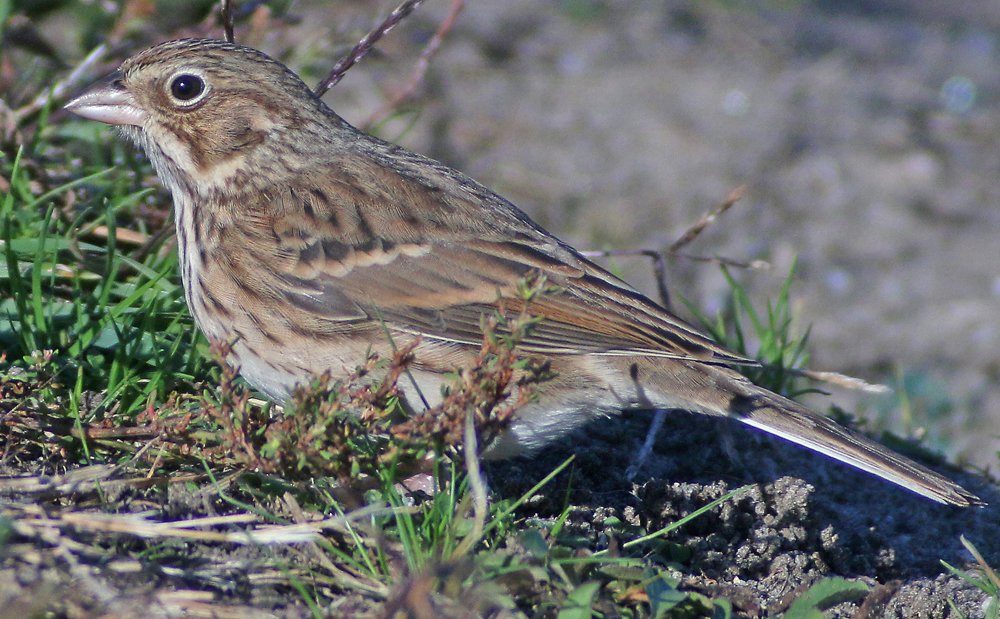
How great a look is this? Vesper Sparrows are never this cooperative.
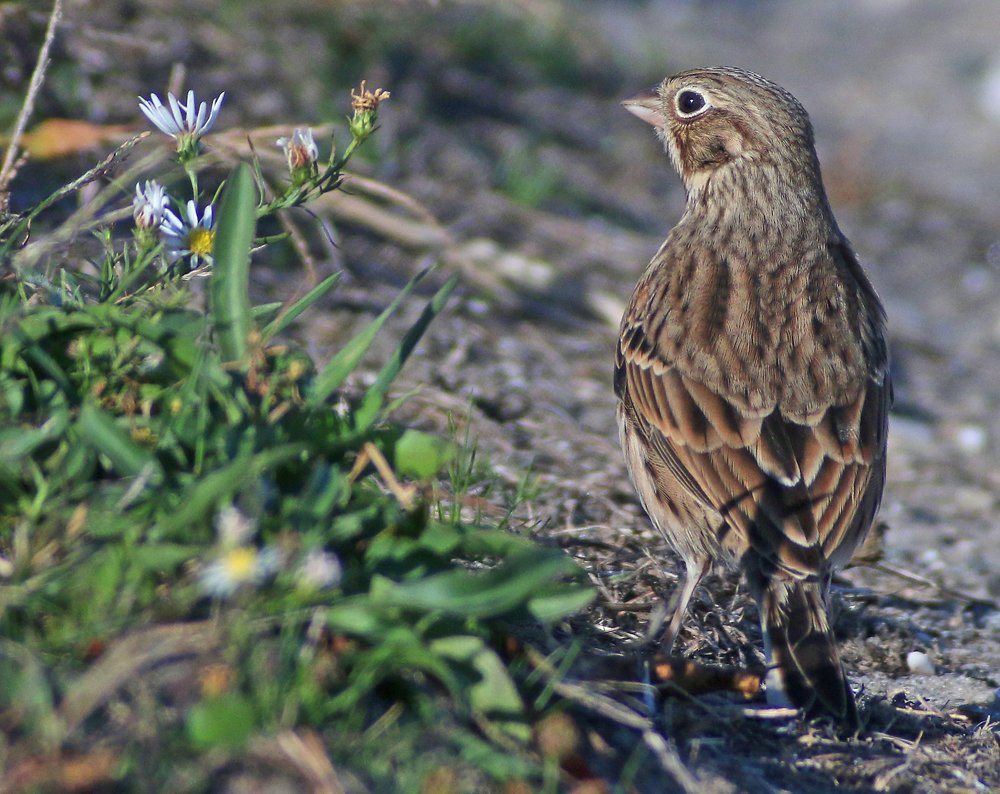
This bird even took time to smell the flowers. Or maybe it was looking for seeds…
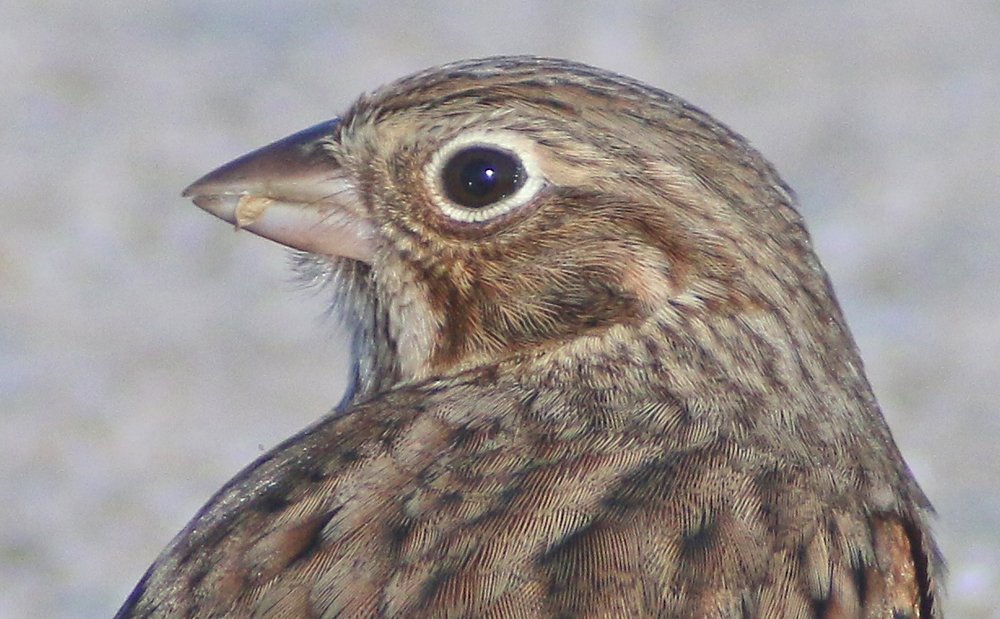
It’s not every day you get a look like this at a Vesper Sparrow.
On Sunday morning I had a brief outing at Kissena Park, mostly hoping to connect with a Red-headed Woodpecker that had been present recently. After brief and poor looks at the woodpecker I headed to the field edges and found a nice flock of foraging sparrows with yet another Vesper Sparrow! This bird was foraging in medium length grass and both times a raptor came past it and all the other birds flushed into the brush. I took advantage each time by moving closer to where the birds seemed to prefer foraging and that strategy paid off!
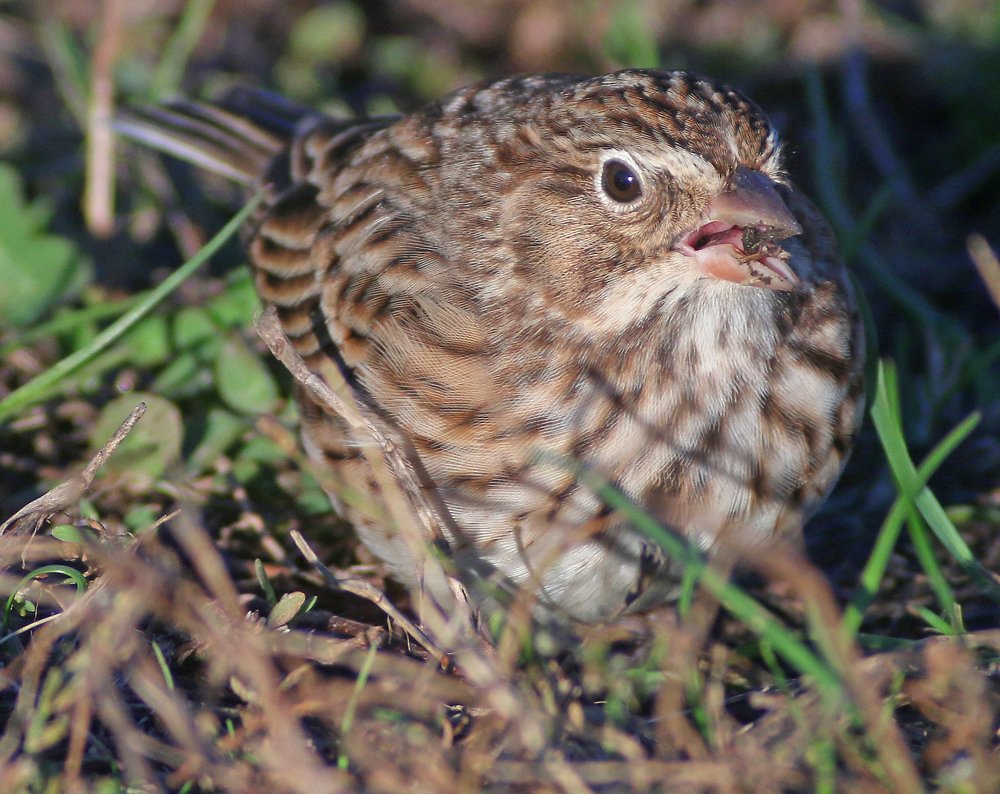
I didn’t get many shots like this of the Kissena Park bird because the grass was a bit of a problem.
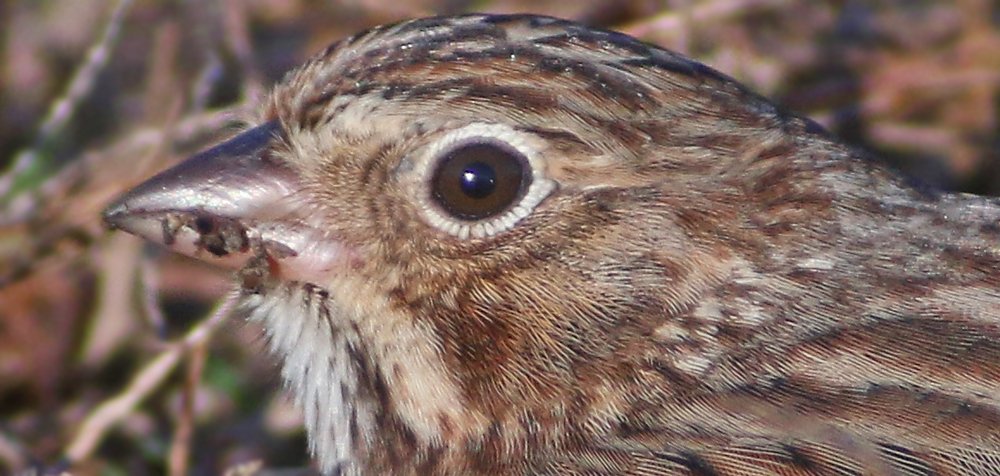
But to get decent portraits two days in a row was amazing!
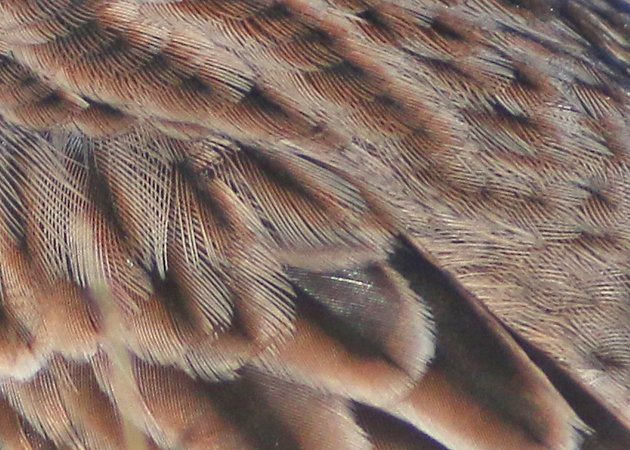
And feather detail shots are always fun.
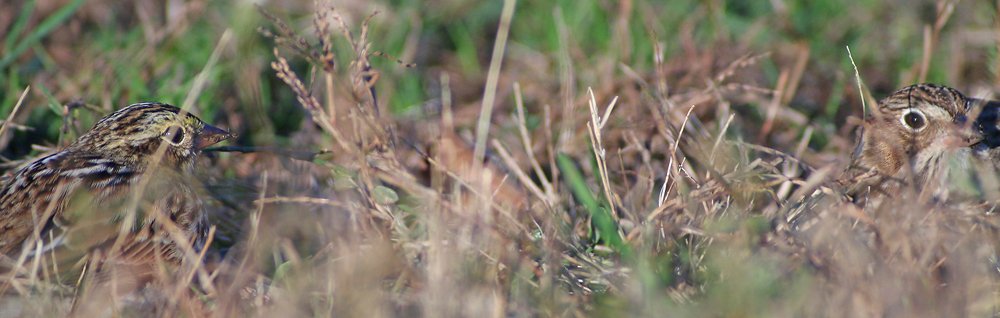
It’s also nice to get a comparison shot. Here a Savannah Sparrow joins with the Vesper Sparrow.
…
If you liked this post and want to see more great images of birds make sure to check out 10,000 Clicks, our big (and growing) page of galleries here at 10,000 Birds.
…







Leave a Comment