Wood Thrush
By Charlie • October 23, 2007 • 6 commentsWood Thrush Hylocichla mustelina
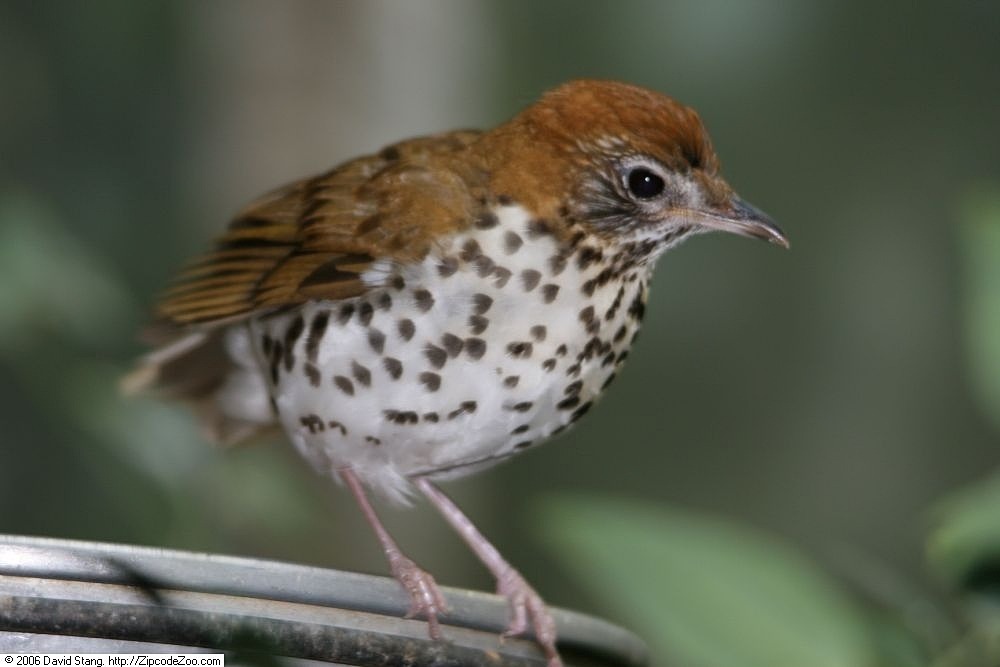
Central Park, NY. 19 October 2007
The Wood Thrush Hylocichla mustelina breeds across most of eastern North America, ranging from the panhandle of Florida northward to southern Canada. The species generally reaches its western limit at the eastern edge of the Great Plains, although it can be found breeding along the Missouri River through central South Dakota. It winters mostly in primary, broad-leaved forests at lower elevations from southern Mexico to western Panama.
The beautiful Wood Thrush has become a symbol of the decline of Neotropical songbirds of eastern North America, having declined 43% since 1966. Along with many other species, this thrush faces threats both on its North American breeding grounds - where forest fragmentation has resulted in increased nest predation and enabled increased brood parasitism by Brown-headed Cowbirds - and on its Central American wintering grounds, where continued destruction of primary forest has eliminated preferred Wood Thrush wintering habitats, forcing the birds to choose secondary habitats where mortality rates are higher.
This bird was photographed on a dismally grey day near Belvedere Castle in New York’s Central Park: most Wood Thrushes would normally be further south by mid-October and the late date of this sighting may reflect the abnormally warm fall temperatures recorded in 2007.


All photographs © Charlie Moores


Thanks for the beautiful photos of the Wood thrush, the state bird of my current hometown, Washington, DC, where I can always count on seeing one or two per summer.
We had wood thrushes in our backyard till our neighboring developments came in and cut out understory behind us and a giant development took a ton of woodland out several blocks away. We lost our wood thrushes and ovenbirds. I waited every morning this spring to hear the call of the wood thrush. That wonderful song never came.
Nice thrush set! I love the Wood Thrush. This great bird species is a great example why we must keep working on bird conservation.
Great post!
Enchilada, Veery, many thanks for your positive comments - much appreciated.
Liz, it’s so sad - there’s so much in the news about large-scale deforestation I think people forget about the constant ‘nibbling away’ of millions of small patches of understorey and woodland that is going on all over the world: it’s no wonder so many of our bird populations are crashing when you consider the total loss of habitat. (Love your site by the way - very individual! I’m lucky enough to have seen four species of fairy-wren in Oz and they’re just amazing. If you’d like to link, let us know)
Thank you for including the Wood Thrush in your blog! I find their call (song) absolutely enchanting. However, due to the fact that they are often heard and not seen, it is wonderful to be able to appreciate their ascetic qualities in your wonderful photographs!
I live in Brandon, Mississippi where we have a small patch of primary timber that includes some very tall hardwoods. I’ve heard the beautiful, electrifying sounds of the thrush for about 5 years now. There must be 7 or 8 birds that summer here every year. I’m glad Jessica mentioned they are often heard but not seen. To this day I’ve never gotten a good look at them. For the longest I thought they must be ‘very tiny’ birds. While in a nature conservatory in Gastonia, North Carolina, with surprise I heard the sound that I’d been listening to for years. I finally got to see the beautiful bird that sings high in the woods. Needless to say we’re blessed to have such a large flock near our home that sinds to us both in the early dawn and latter dusks of the day.