

“The White Birds,” a poem W.B. Yeats wrote early in his career as a poet and dramatist, is like his other early works in that, it meditates “on the themes of love or mystical and esoteric subjects.”* Not a well-known poem, it is overshadowed by another of his early poems, “The Lake Isle of Innisfree” that was included in his collection of twenty-two poems called The Rose.
The White Birds
I would that we were, my beloved, white birds on the foam of the sea!
We tire of the flame of the meteor, before it can fade and flee;
And the flame of the blue star of twilight, hung low on the rim of the sky,
Has awakened in our hearts, my beloved, a sadness that may not die.A weariness comes from those dreamers, dew-dabbled, the lily and rose;
Ah, dream not of them, my beloved, the flame of the meteor that goes,
Or the flame of the blue star that lingers hung low in the fall of the dew:
For I would we were changed to white birds on the wandering foam: I and you!I am haunted by numberless islands, and many a Danaan shore,
Where Time would surely forget us, and Sorrow come near us no more;
Soon far from the rose and the lily, and fret of the flames would we be,
Were we only white birds, my beloved, buoyed out on the foam of the sea!
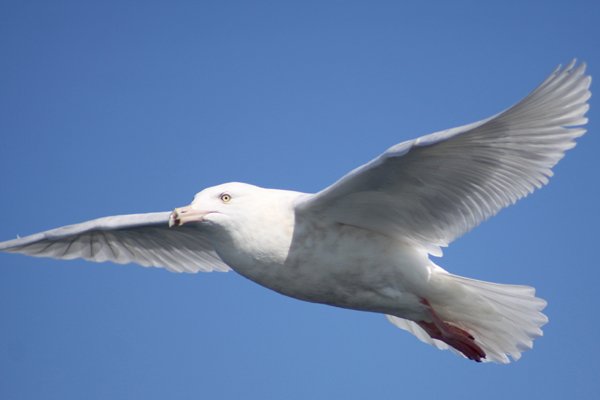
Yeats wrote the poem the day after Maude Gonne, “his great unrequited love,” rejected his first marriage proposal.** 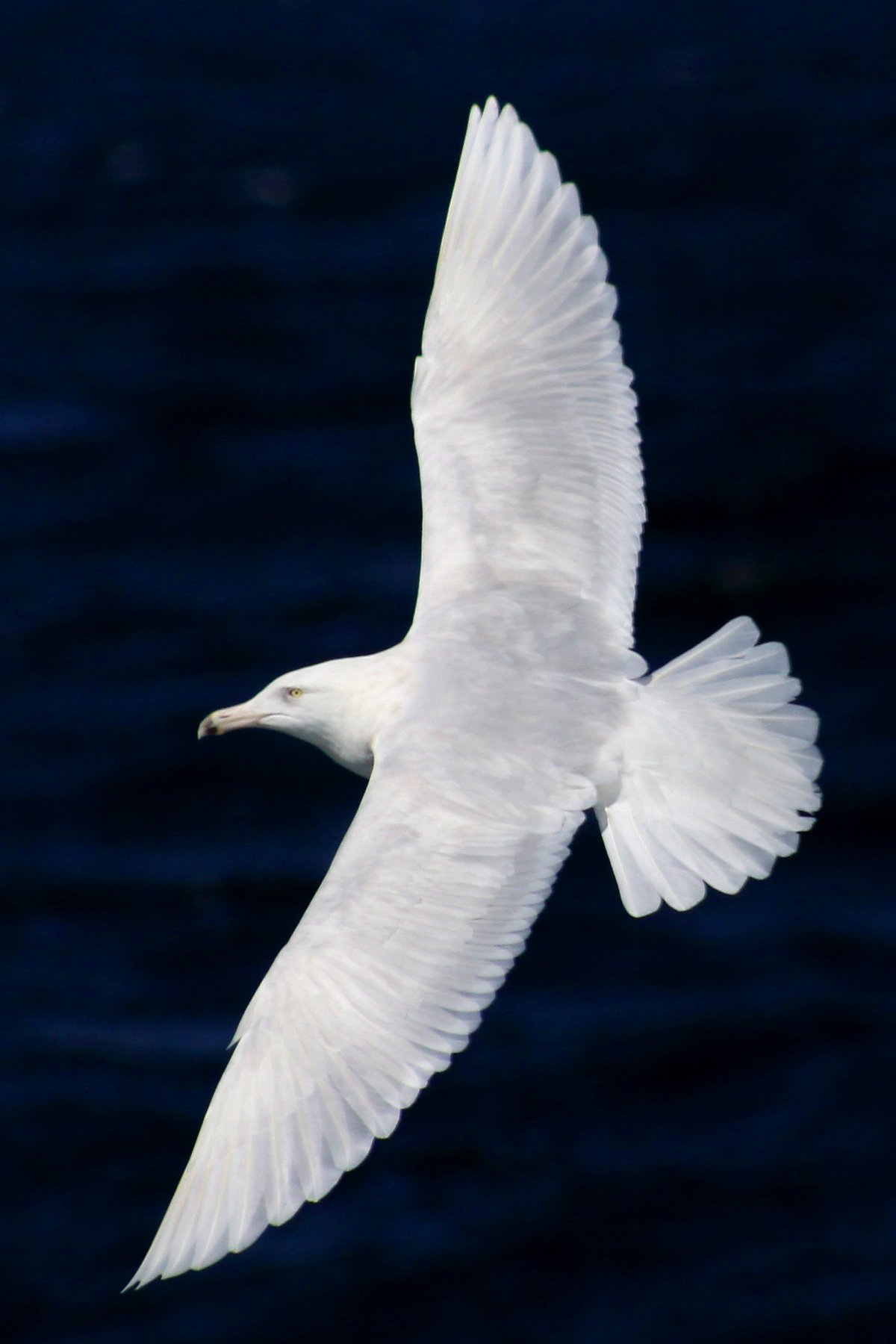 She had expressed the feeling that she would rather be a “seagull” than any other bird. Yeats took Gonne’s idea and ran with it.
Yeats apparently felt the “flame of the meteor,” the “flame of the blue star of twilight,” and the “lily and rose,” though beautiful, are only temporary, and as such can only lead to disappointment in the long run. But becoming white birds, together, would bring a kind of immortality to Yeats and Gonne, symbolized by “a Danaan shore, / Where Time would surely forget us” (Danaans were pre-Christian gods in Ireland). As gulls, the pair could escape the “fret of the flames” and no longer be troubled by mortality and could live together forever.
As a poem it is not a masterpiece but the image of a pair of lovers becoming gulls together and flying off to an island where they are immortal is certainly irresistible to this bird-blogger. That Gonne remained Yeats’ unrequited love through three more marriage proposals goes to show that she was already married to the idea of Irish nationalism (and, in fact, she later married an Irish nationalist). Eventually, Yeats and Gonne did consummate their relationship but that one night did not change their relationship long-term.
Fortunately, they did achieve a form of literary immortality and their love, though never formalized by marriage vows, will be passed down through the ages.
…
…
*Per Wikipedia.
**According to this site.
…
If you liked this post and would like to browse the entire archive of poetry posts on 10,000 Birds please check out our Bird Poems page.
…








Corey,
The Irish American Heritage Museum salutes you!
Well, I, for one, love bird poetry and appreciate your pointing out Yeats’ poem to us. It is, as you say, not a great poem but it does touch me.
Although, for me, there are many birds I’d rather be than a seagull! 🙂
@Will: Sweet!
@Liza Lee: You’re welcome. And I, too, would pick quite a few birds before I got to gulls…
It loooks and seams to be exaxtly what Yeets wood be speeking bout.
Hi Corey, thanks for reproducing the poem. I’m working on a trilogy of novels about Yeats and the Gonnes and will link to your post from a post I’m now putting together about the poetry inspired by the Gonnes – mother Maud and daughter Iseult. Just one point to note. Maud may have been “married” to Irish nationalism but her repeated refusals of Yeats proposals was more to do with her being involved with another man, the French journalist and activist, Lucien Millevoye (Iseult’s father). And there is convincing evidence that she did, in 1898, consider accepting WB as a husband but that he, more in love with the idea of love than a real, red-blooded woman, took flight. Lovely blog, thank you for the work